Yemen: rebuilding social cohesion through sport
In a country where war has attempted to erase the future, there is a sound that defies the silence of destruction: the sound of a ball being kicked on a dirt field.
With the project “Promoting Inclusion and Social Development through Sports in Yemen”, funded by the adidas Foundation, we are intervening in the governorates of Aden and Lahj with one goal: to break down the barriers of discrimination through athletic activity.
The case for intervention in Yemen: a crisis that is not only military, but human
According to 2024 data (HNO), 80% of the 4.5 million internally displaced persons (IDPs) are women and children.*
In this scenario, chronic discrimination —such as that affecting the Muhamasheen minority — has intensified.
In such a fragile context, the worst dangers flourish: early marriage, child exploitation, and recruitment. Intervening here means helping to rebuild the identity of those who have been made invisible, healing wounds, and offering an alternative to the rhetoric of hatred and discrimination.
*www.unocha.org/publications/report/yemen/yemen-humanitarian-needs-overview-2024-january-2024-enar
Who are the Muhamasheen?
The term literally means “the marginalized ones.” They are a Yemeni ethnic minority that has suffered systematic social segregation for centuries. Often lacking tribal protection and identification documents, they live in conditions of extreme poverty.
The function of sport: a space for concrete interaction
Group sporting activities make it possible to:
- Create a “Neutral Zone”
In conflict areas, safe meeting spaces are rare. A football tournament offers a structured pretext for young people from different backgrounds (IDPs, host communities, marginalized groups) to interact on an equal footing.
- Share Common Rules and Train Discipline
Sport requires respect for common norms and the peaceful management of confrontation. For young people aged 10 to 24, participating in a football league means training for coexistence and overcoming stereotypes through action, even before words.
- Engage Communities
Activities engage the youth but also involve local committees. Sport becomes a vehicle for spreading messages of inclusion and tolerance that reach families and community leaders.
The power of this vision found its first practical application just a few weeks ago.
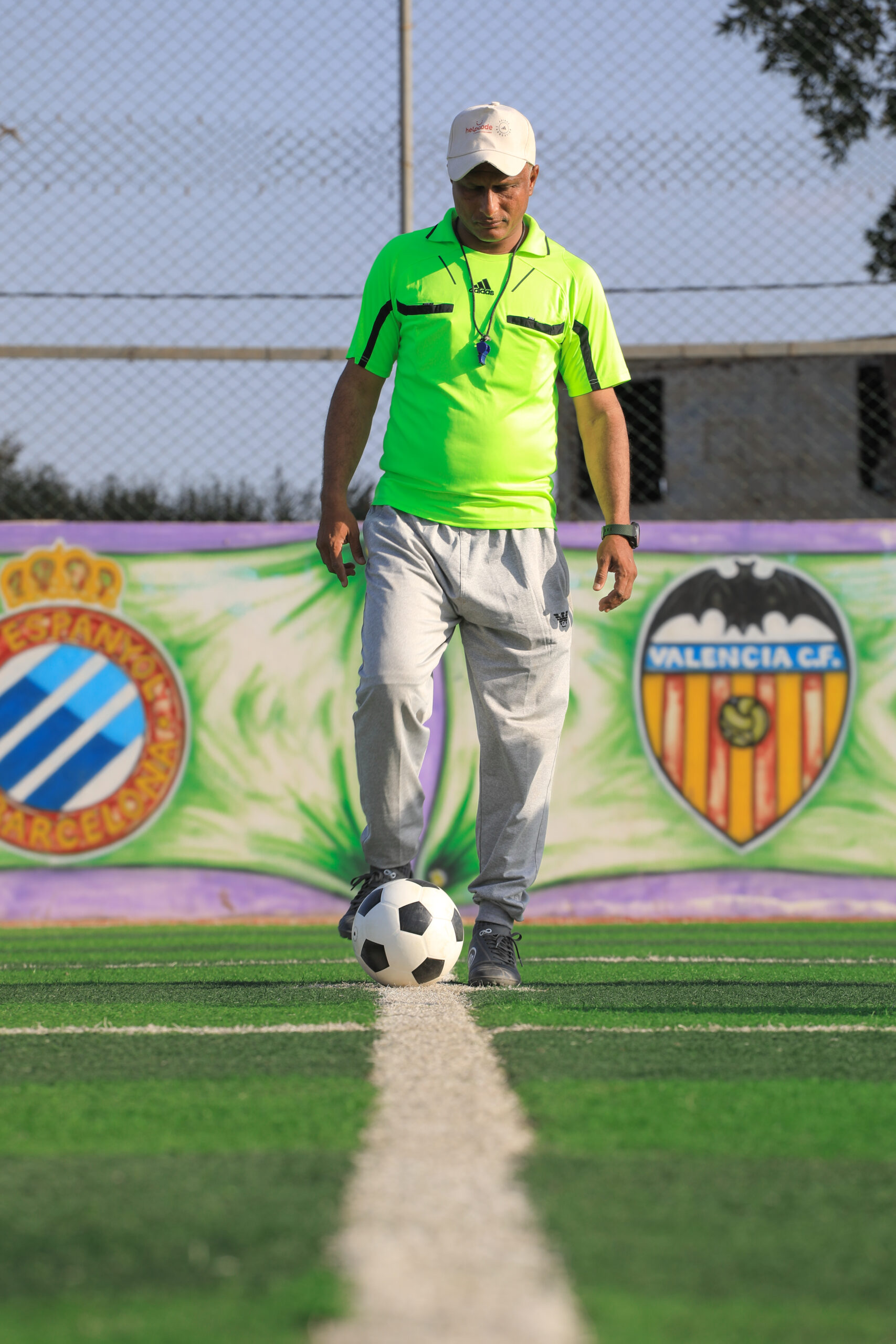
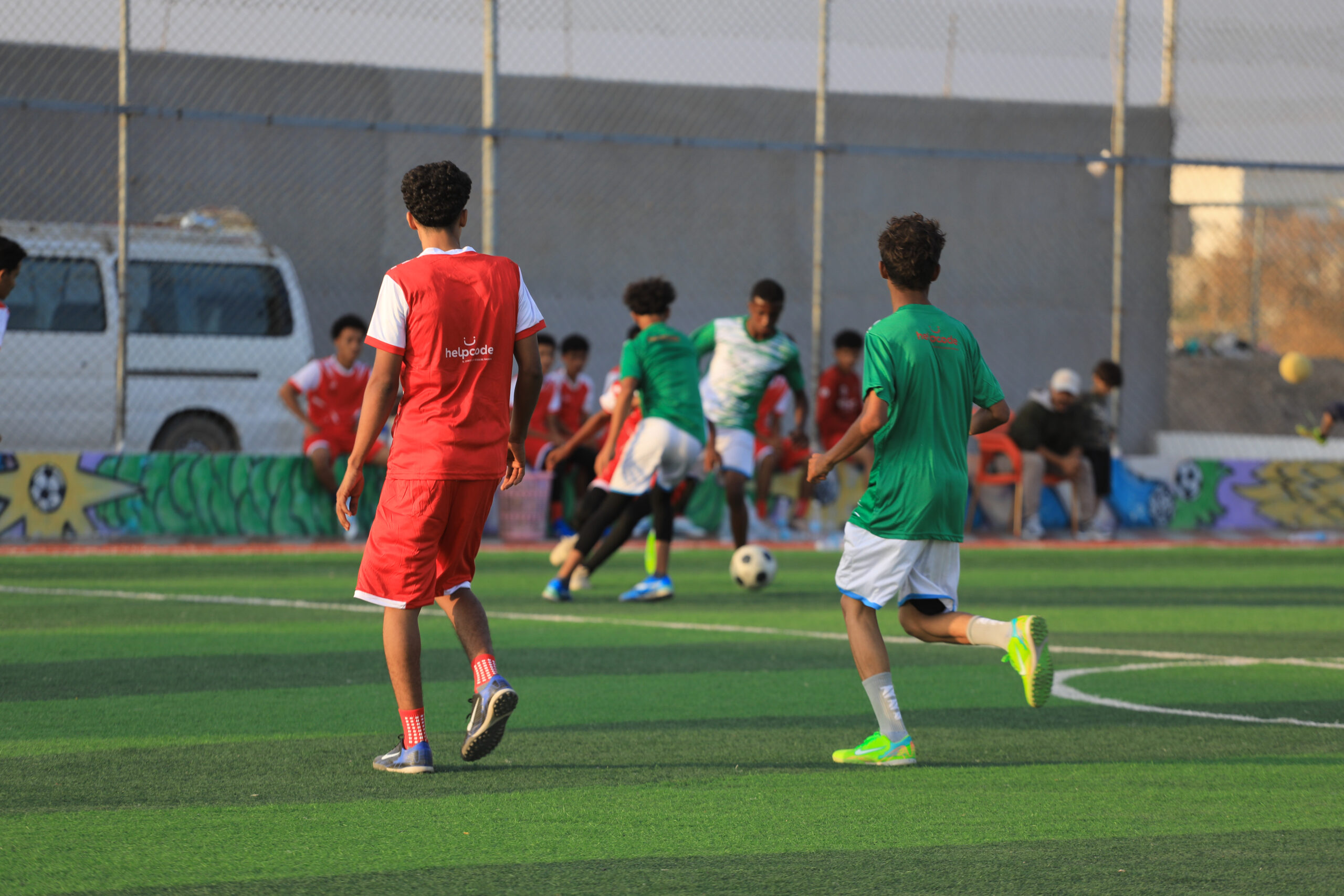
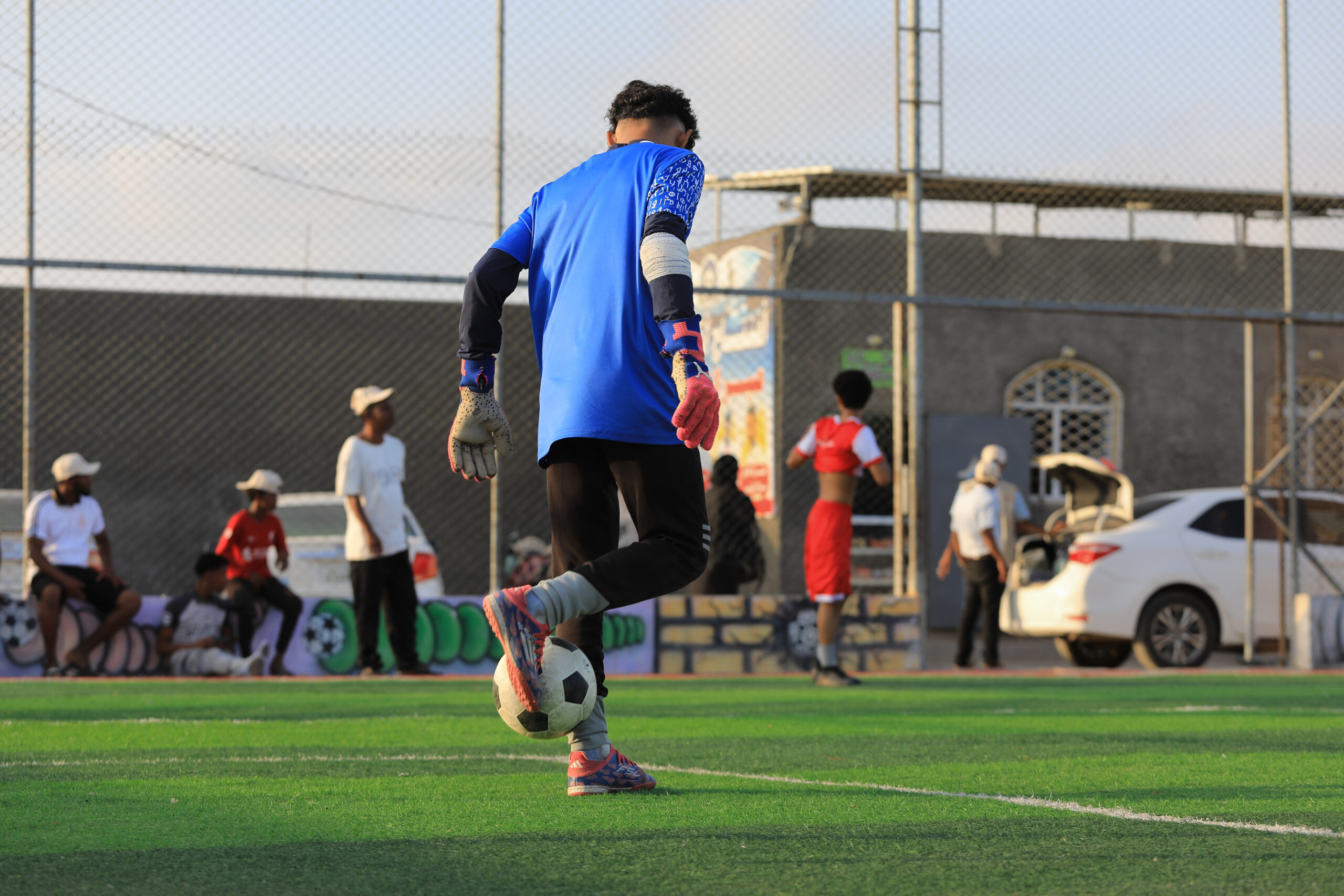
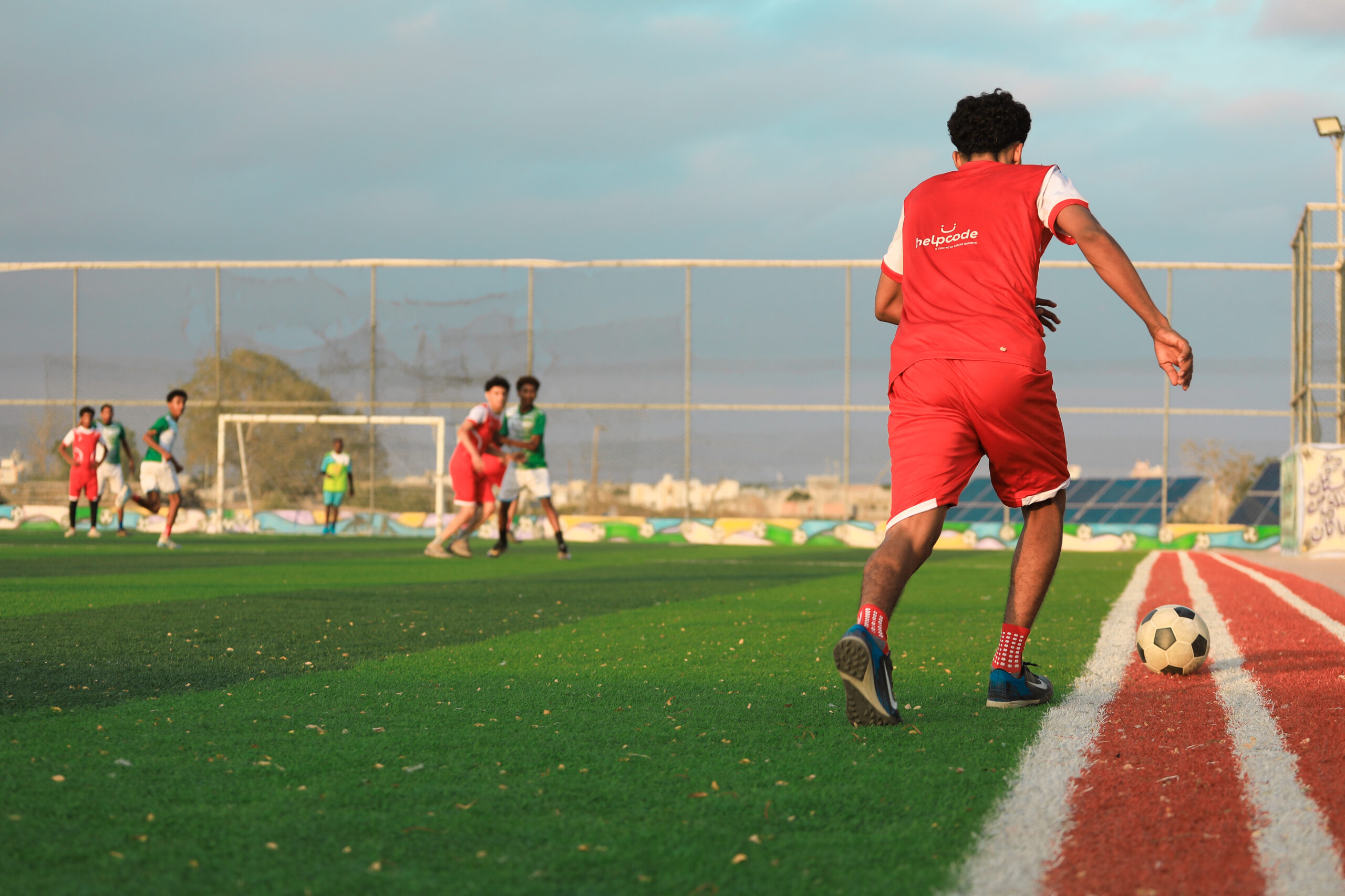
The kick-off: February football matches in Lahj
The project came to life in the first week of February 2026 in the Lahj governorate, with the first matches turning theory into action.
On February 4, at the Anas stadium in the Lahej district (Sabre Academy), the inaugural match was held between Sabre Academy and Al-Hubail Club. The match, held under the patronage of the Minister of Youth and Sports, Nayef Al-Bakri, saw Sabre Academy win 4-2 in an atmosphere of great collective enthusiasm.
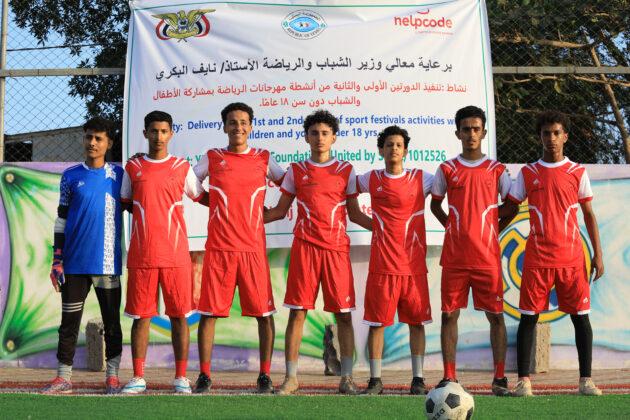
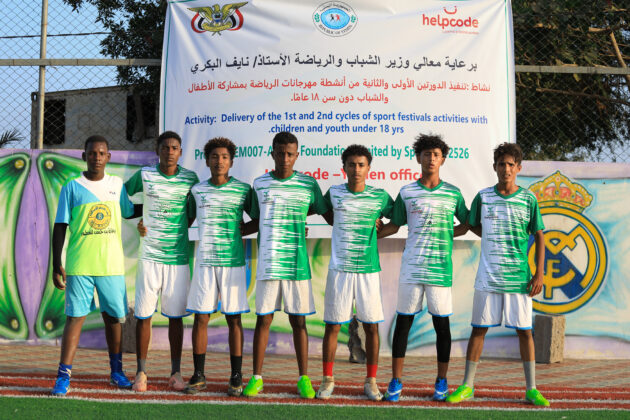
The following day, February 5, activities continued at the “Hamdeen Saleh” field in the Al-Houta district. This time, the popular teams of Waheeda and Al-Abadel faced off. After a very balanced match that ended 0-0 in regulation time, Waheeda prevailed 3-2 on penalties. Beyond the technical result, what struck those present—including local officials and Ministry representatives—was the massive public attendance, a sign of a strong desire for normalcy and shared experiences.
An impact that lasts
These events are only the beginning of a journey that includes structured tournaments and the redevelopment of sports facilities. By reducing the distance between marginalized groups and host communities, the project aims to leave a legacy of a more solid and resilient social network, capable of looking beyond the logic of conflict through the values of respect and participation.